
The Fertilizer Squeeze
The factors behind the big price hike and where it's going.

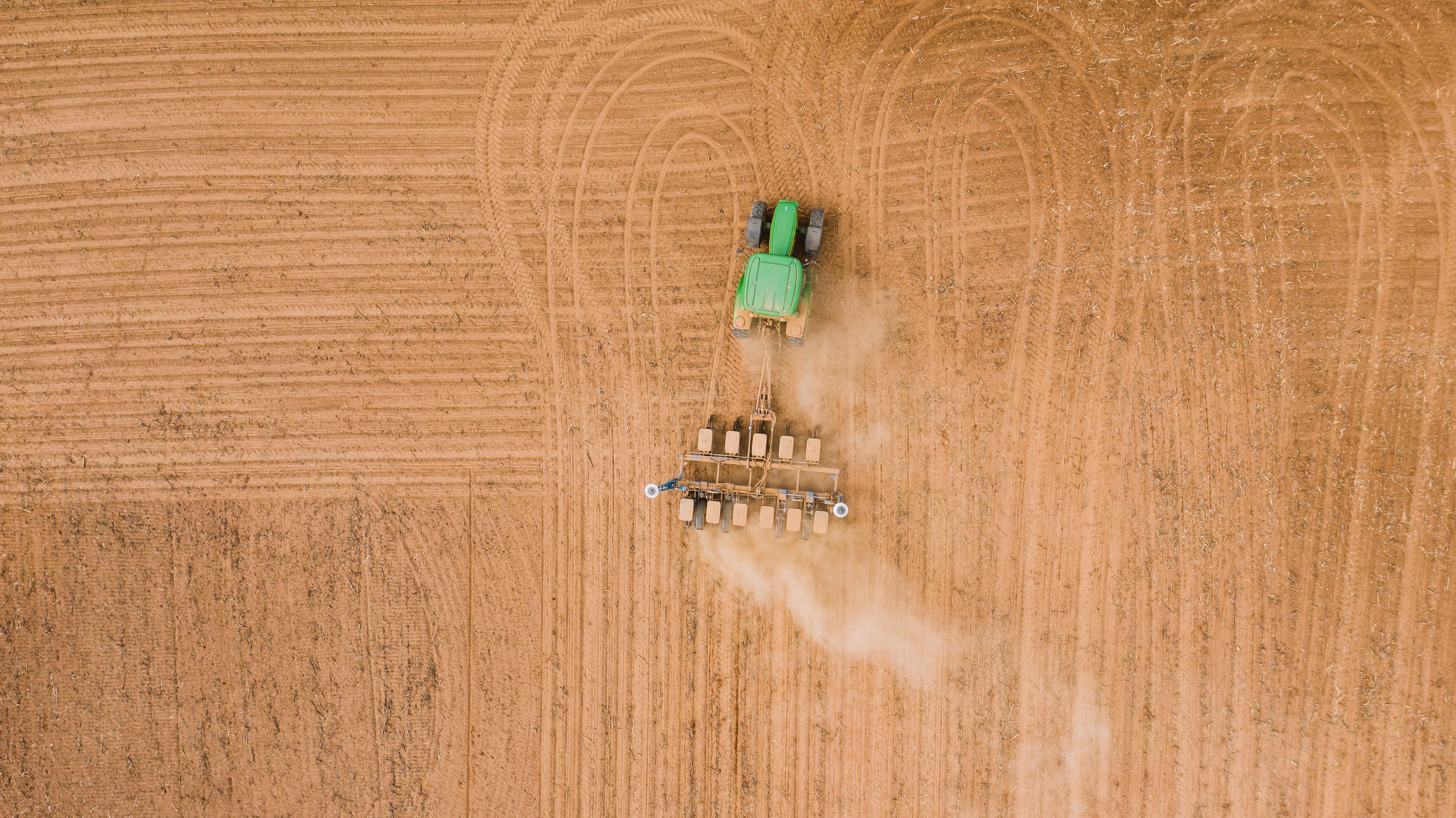
Photo by Kelly L from Pexels
As planting deadlines loom for a significant chunk of the US crop, uncertainty around the pricing and supply of fertilizer is increasing. Some of it is directly related to the Russian/Ukrainian conflict, but there are a number of other supply-related factors which are putting unprecedented pressure on all three of the main synthetic fertilizer sources. Here’s what we know:
A labor dispute at Canada’s second-biggest railroad, Canada Pacific, is going to crimp supply of potash, a key input for making nitrogen-containing fertilizers. CP hauls most of the potash to export terminals and into the U.S. The other two major suppliers of potash are Belarus and Russia, which have transport and business operational risks of their own.
Canada's Nutrien Ltd, the world's biggest fertilizer producer, has announced it plans to increase potash output by nearly 1 million tonnes this year to about 15 million tonnes in response to the uncertainty of supply from Eastern Europe. But that will only help suppress pricing for this planting season if the logistics issue is solved sooner than later.
Pro Farmer is reporting that Brazil is “desperately looking for additional sources of fertilizers from Canada, the Middle East, Chile, and other countries.” They add that “there is uncertainty within Brazil about how much fertilizer the country has on hand.”
Another fertilizer giant CF Industries was already predicting supply constraints and increased pricing back in November last year when it was presenting its third quarter results. At the time, it said “lower global production and government actions have created a supply constrained global market.” It also noted that “the margin opportunities available to our network have expanded greatly due to a wide energy spread between North America and marginal production in Europe.” Further, it said global fertilizer production was lower in 2021 “due to severe weather in North America, higher maintenance worldwide, and ongoing European shutdowns and curtailments.”
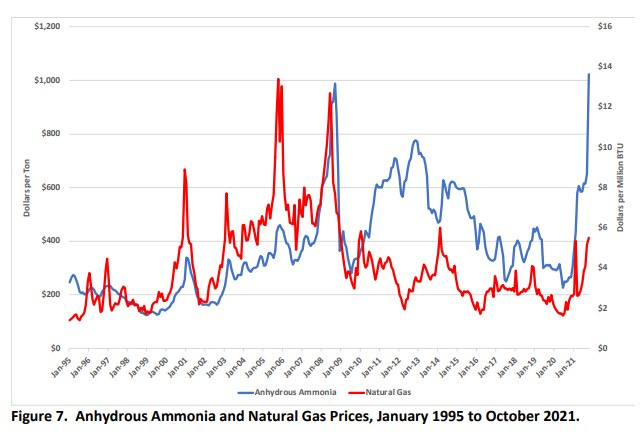
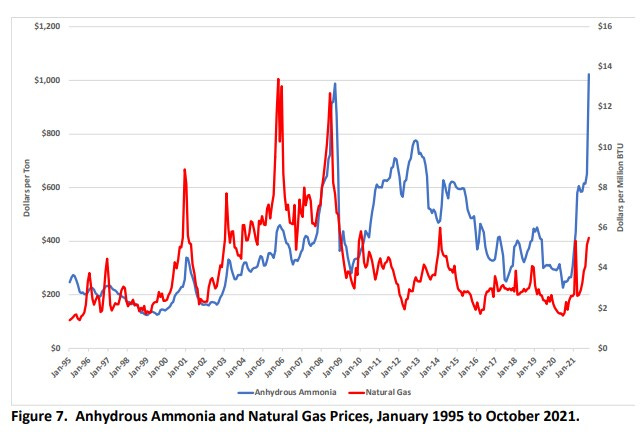
A recently released study from Texas A&M suggests the increases in nitrogen fertilizer prices have less to do with rising natural gas price and in fact track more closely with higher corn prices. The report noted that the price of anhydrous ammonia increased $688 per ton from the end of 2020 through the end of October 2021. But the increase in the value of the embedded natural gas accounted for only $102 (or 15%) of that increase. This chart illustrates it clearly:
Demand and Supply Factors
For more of a global perspective on demand, here’s a chart to understand the importance of fertilizer to agricultural production:
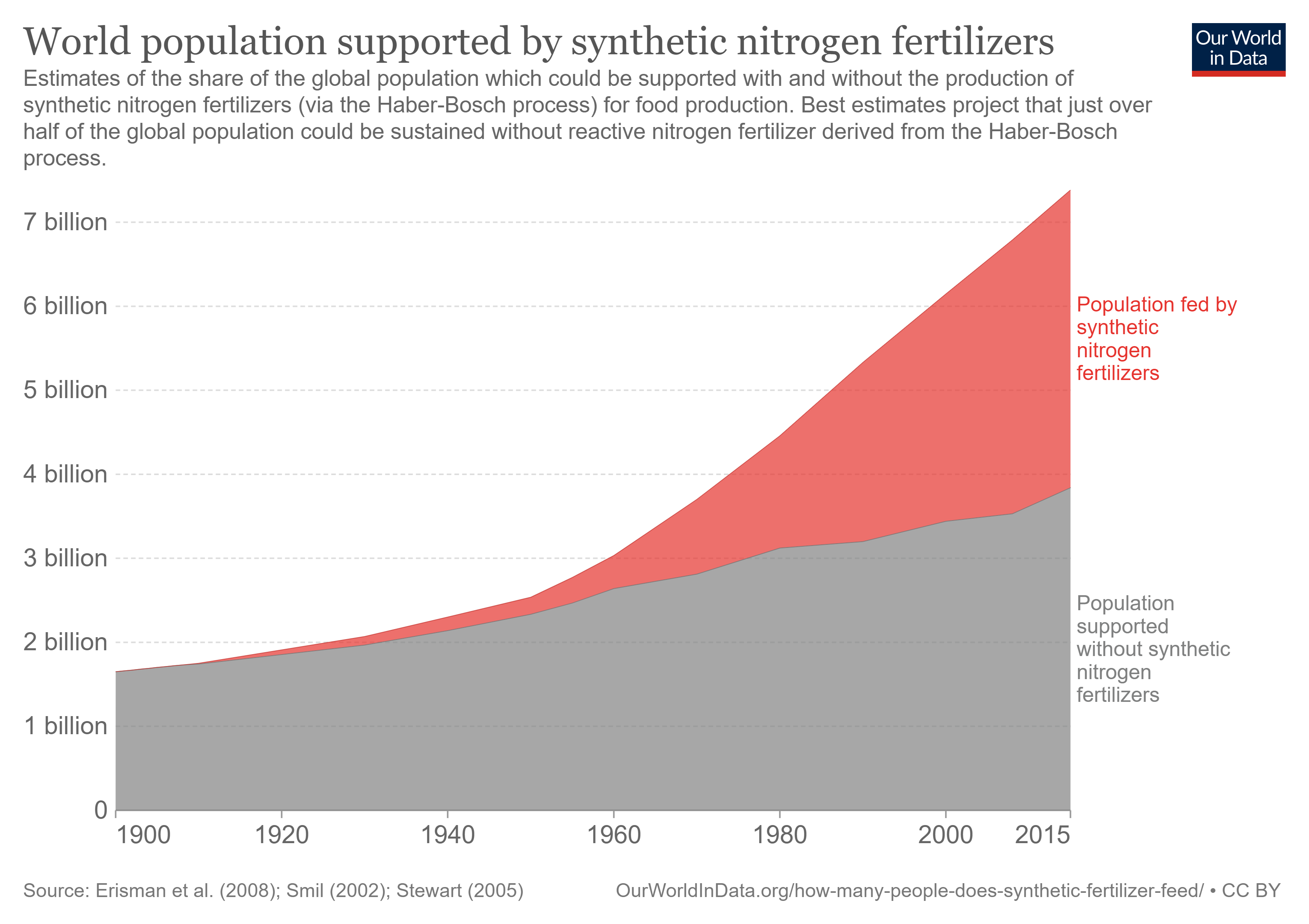
This is data through 2015. Back then, we were only able to feed around half the world without fertilizer. That will shrink considerably as we race to to a global population of 9 billion. Bottom line, we need more fertilizer, not more.
Here’s another revealing chart on how much NPK we are applying on every hectare of arable land. Some countries are a lot more liberal than others:
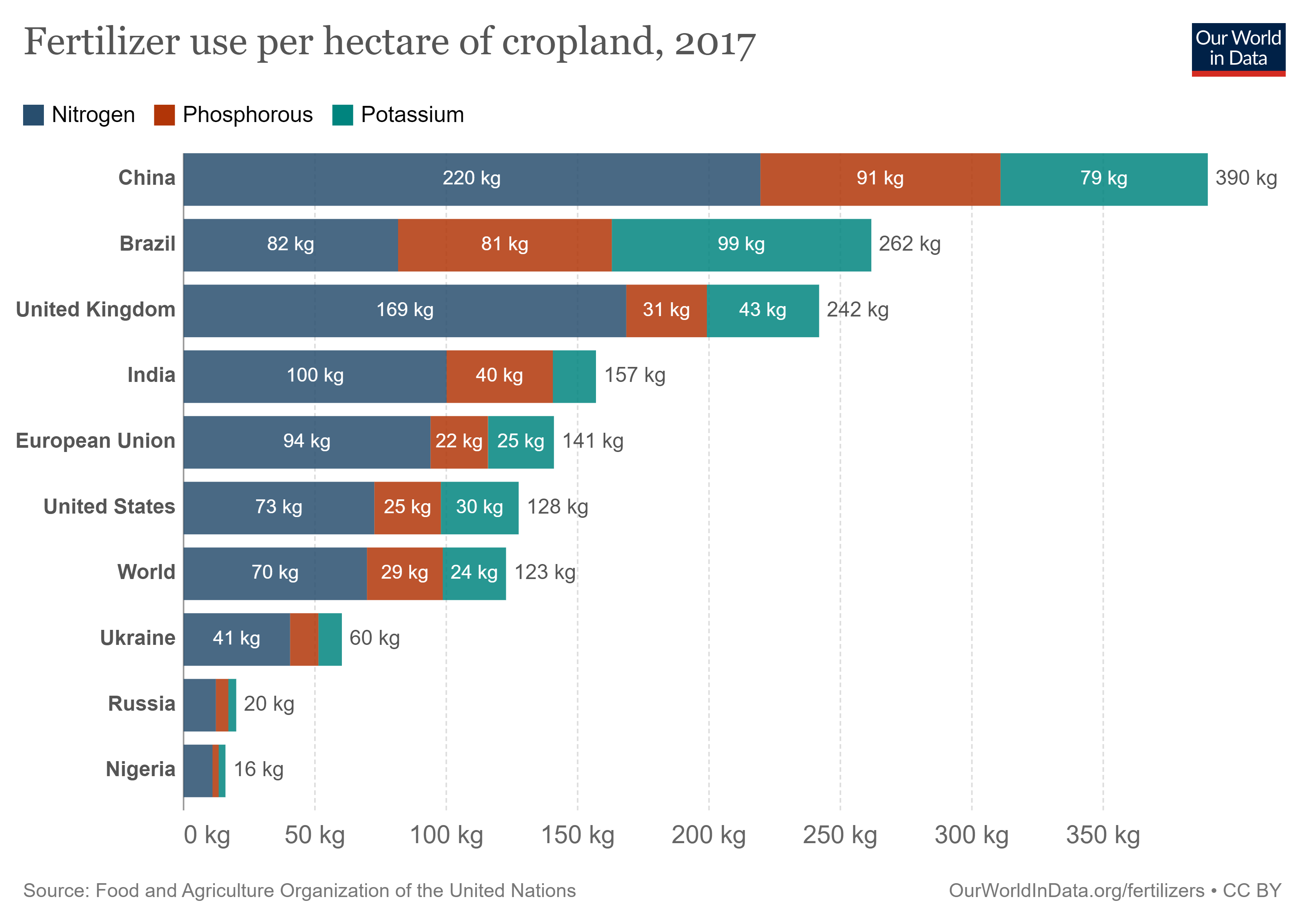
It will be interesting to see how these amounts change over time as precision application systems become more common. The Mississippi watershed nitrogen run-off issue in the U.S. will certainly drive this, as will increasing price. The billion-dollar question: how high does anhydrous price have to go before it becomes a no-brainer for every farm to change application practices?
The other tech to throw at this is microbe-based soil amendments. They’ve been around a long time, but they have struggled to show success outside the lab. Apparently there are a lot more natural microbes in the soil than we ever thought. They react in different ways to introduced microbes in different soil types and environmental conditions. So differently, that it’s impossible to guarantee consistent results.
There are a few startups with ideas to solve this problem. One of them, Kula Bio, has figured out how to give microbes an energy source which allows them to work even in the harshest and depleted environments. The microbes build up energy stores in certain conditions and can sequester nitrogen. Instead of only surviving for days like most microbes, Kula’s can survive and thrive for weeks and can feed plants small amounts of nitrogen over time.
Whether Kula and other microbial technologies can replace a significant portion of synthetic fertilizers is an open question. It will ultimately come down to the price of the fossil fuels used to make synthetics. We suspect the Haber-Bosch process is far from reaching the end of its value as an important tool to feed the world.
Briefly
John Deere, which officially launched its fully autonomous tractors at CES in Las Vegas in January, says it will have between 10 and 50 of them running in tillage operations by the fall, primarily in the U.S. upper Midwest.
CIBO Technologies recently partnered with grain trading platform Bushel to create a Carbon Bridge program intended to reduce risk for U.S. growers switching to regenerative agriculture practices. Bushel will provide digital infrastructure that can streamline and speed up the process of joining a carbon program for farmers. The program encourages farmers to use regenerative farming practices which sequester carbon and ensures that farmers get paid quickly for making this switch.
Australian startup Rubens Technologies has developed a promising technology to help fruit growers time harvesting more precisely and reduce waste. The company combines a hand-held scanner with machine learning analytics to assess fruit pre- or post-harvest and obtain real-time information. It is the non-intrusive nature of the assessments which is the innovation, according to CEO and Co-Founder Daniel Pelliccia.
Deals
Israeli-based SupPlant has raised $27 million for its irrigation tech platform. Red Dot Capital Partners led the round. Menomadin Foundation, Smart-Agro Fund, Mivtach Shamir, Deshpande Foundation, PBFS, Boresight Capital and Maor Investments also participated. The new money will be used to grow SupPlant’s on-farm sensor system designed to help farmers increase yields through optimized water usage.
Subscribe below to Modern Crop to get the next issue in your inbox and stay on top of news and trends impacting the business of farming. You might also be interested in our other ag-focused newsletters Demand Insights and Protein Insights which cover important developments in consumer food demand trends and livestock production.
If you have a new farm-focused tech product or service to talk about or other news to share, contact us at moderncrop@dekenmedia.com. You can also find us on Twitter: @moderncrop.